Affiliate Program ”Get Money from your Website”
Showing posts with label pets food. Show all posts

Which Birds Make Good Pets?

Having a pet can be a wonderful, rewarding experience and the best thing about having a pet is they’re always there for you.
Birds are the one of cute pets in the world.Are you thinking of adopting a pet bird?
Birds make great pets, but it requires making a good decision before you take on your new companion.

A little knowledge before you make your choice can save you lots of headaches down the road and ensure that you and your new pet will get along just fine in the years to come. Purchasing a bird for a pet doesn't have to be difficult.


Good Choices
Canaries, finches, cockatiels, parakeets, and lovebirds are birds who have a long history of selective breeding in captivity and can be considered domesticated strains of wild species. Their basic needs are more easily met,proper supplies to care for them are readily available, and these birds can live long, happy lives in a caring home.
There are birds that a very personable, like cockatiels and lovebirds, birds that talk, like parrots and mynah birds, those that sing, like canaries and those that are fun to watch, like finches.


If you like smaller birds, you might go for finches, lovebirds or parakeets. If you are not intimidated by large birds, a parrot, macaw, cockatoo or conure might make a good companion.

If you are on a budget, get a Budgie, which is a Parakeet. They are not only affordable, but they make great pets for kids. Most of them are beautifully colored and they can be very affectionate if you spend time with them. Some even learn to talk.

If you want something more exotic and showy, try a large Parrot. They can learn to talk and do tricks and they love to show off. These brightly colored birds can also be very affectionate once you have earned their trust.

Related Article:
- How To Starting Get Pet Bird ?
- How To Make Your Own Bird House
- How to Clean Up Pest Bird Droppings!
Read More →
0 comments

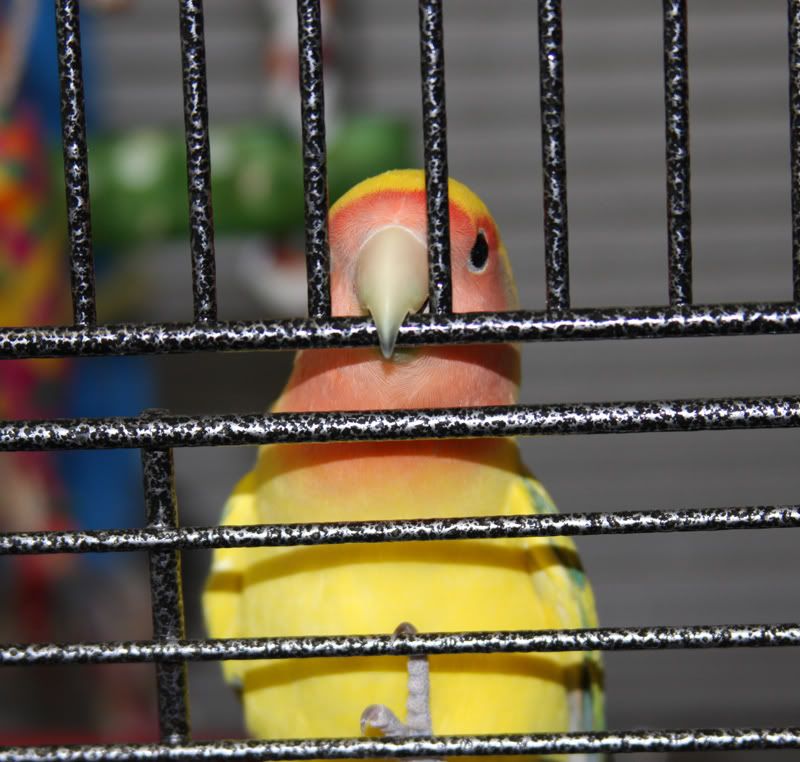
Selecting Cage for Lovebirds

One important thing after selecting the lovebirds are selecting the right cage for your lovebird. Selecting the right cage for your lovebirds is an important part of lovebird care. The bird house should be with suitable and proper size for your loved Lovebirds. Cage size is very important when you prepare a home for your pets. The cage you buy should have sufficient room for it to play around. Your lovebird needs to be able to stretch and flap his wings without hitting the sides of the cage or any toys. There should be horizontal bars in the cage as lovebirds love climbing.


Lovebirds are so playfully and as in their nature they need plenty of toys to keep them busy while they are in their cages. The most important step in love bird care is the positioning of the cage. This crucial decision lays the foundation of your relationship with your lovebird. This also determines your lovebird's mood, playfulness and attitude to you and your family!
Read More →
0 comments

Selecting your Lovebirds

There are so many Lovebirds you can select from petshop. When you select lovebirds always be cautious to select healthy birds. There are large varieties of lovebirds to choose from.for those of you who are beginners maybe you are confused to select the lovebirds. Do not be confused to choose, make sure always choose young hand-raised birds as they are easy to be tamed.Older, wild, colony or parent raised birds may prove difficult to tame. Pay a little attention to the activity of the birds, as their activities will reflect their health; buy those lovebirds which are in sound health. Choose birds from both the sexes to make breeding easy. Always have an eye on the colour of your bird as colorful birds attract eyes.

Lovebirds are actually nine species you can consider selecting as a pet Lovebird. Eight of this species are natives of the African continent. These are the Peach-faced Lovebird or Rosy-faced Lovebird that has two subspecies; Masked Lovebird or the Yellow-collared Lovebird, Fischer's Lovebird, Lilian's Lovebird, Black-cheeked Lovebird, the Abyssinian Lovebird also known as Black-winged Lovebird; Red-faced or the red-headed Lovebird has also two subspecies, Black-collared Lovebird that has three subspecies, and the Grey-headed Lovebird has two subspecies, which is a native to Madagascar, which is also known as the Madagascar lovebird.
Read More →
0 comments

Crucial Tips to Keep Your Lovebird Healthy For Years

Lovebird's care isn't a simple achievement. You must keep in mind the things they require, to keep them healthy and in good condition. They deserve to be supplied with correct nourishment, with the most healthy foods, cages, toys, and allocated special time to bond with their owner.

They adore interaction for they're socially active creatures. Without social interaction either with a human or another Lovebird, or not having diversions, Lovebirds can be bored and stressed that might result to a behavior problem. Certainly, you as a Lovebird owner do not want that. This makes an important addition to your Lovebirds care list.

Do not get inexpensive feed for your Lovebirds. This may be listed in your Lovebirds care list, inexpensive, cheap seed mix or pellets regularly do not have enough nutriments your Lovebirds need to keep them healthy, but they can also be used, if and only if you provide fresh foods for your Lovebirds. Try and give them fresh foods at least 3 to 4 times per week.

Lovebirds love fruits except avocados, don't give them those for they're deadly - add this to your Lovebird's care list. Just ensure you have washed it from the insecticides and pesticides utilized by plant growers. Another addition in your Lovebirds care list - remove all uneaten fresh foods from your Lovebirds cage before they're ruined.

Another addition to your Lovebird's care list is that you want to supply a dish of water for your Lovebirds, they're dependent to water, and they adore to wash. This also, helps keep their feathers in good shape. You must also take into account, the weather, Lovebirds shouldn't be exposed to freezing conditions (add to your Lovebird's care list).

Their are lots of perils coaxing round the corner you may not know. A number of them that you may want to put in your Lovebird's care list are, blue-green algaes, chocolate, dog and cat spit, household cleaners and detergents and Teflon. When Teflon is heated and gets too hot it gives off smoke that are deadly to your Lovebirds.

It's also best to get a good vet before any bad conditions arise. You can try for suggestions, because there are vets who see few cases of bird health issues, and don't have much experience in diagnosing and treating them.

One thing more you need to put on the list for your Lovebird care is the cage. Plenty of things can become a difficulty if you do not have the right cage for your Lovebirds and the right place to put it. You must ensure the cage is of suitable size. Lovebirds like to fly around, so you should confirm it is sufficiently big enough for them to be in a position to enjoy flying. Also you need to place your Lovebirds cage in a spot where there's good daylight. Lovebirds like to get warm under the sun after showering.

Having this information about Lovebird care, you know now the how's and why's of keeping a Lovebird. Good luck.

Author : Elise Gonzalez
Article Source : http://EzineArticles.com/?expert=Elise_Gonzalez
Read More →
0 comments